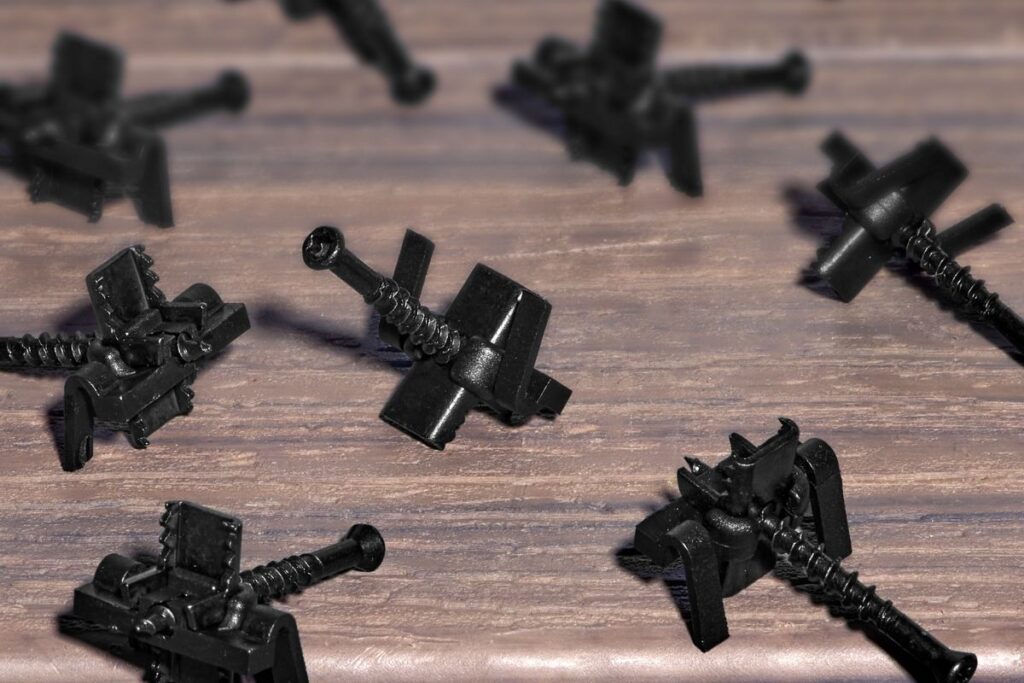
If you’re already using hidden deck clips, you know the basics. The real difference comes down to how the system performs on the job—and how it holds up after install.
Not all hidden deck fasteners are built the same. Small design differences can impact install speed, board movement, and long-term durability.
Across many deck clips, a few common issues tend to show up on the job:
These slow down installs and can lead to callbacks if boards loosen over time.
Not all hidden deck clips are built to work across multiple decking systems. Some are designed specifically for a single manufacturer, which can limit flexibility on the job.
Our Ninja Hidden Deck Clips are designed to fit the most common grooved composite and PVC deck boards, including brands like TREX®, TimberTech®, Fiberon®, Wolf®, and more. This broader compatibility allows you to use the same hidden deck fasteners across different projects and materials—without needing to switch systems based on the board.
For pros working across multiple brands, having deck clips that perform consistently regardless of the board can simplify planning and installation.
One of the biggest performance differences in hidden deck clips is how well the clip actually holds the board in place.
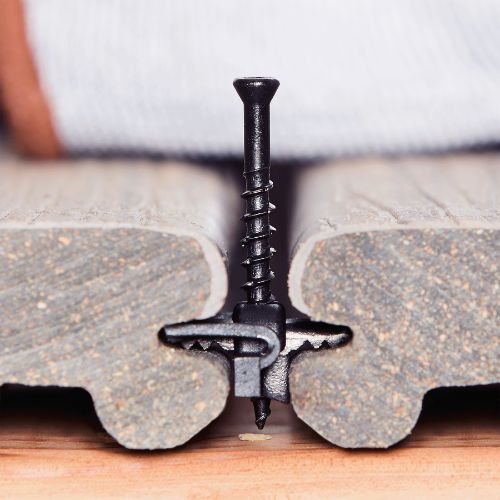
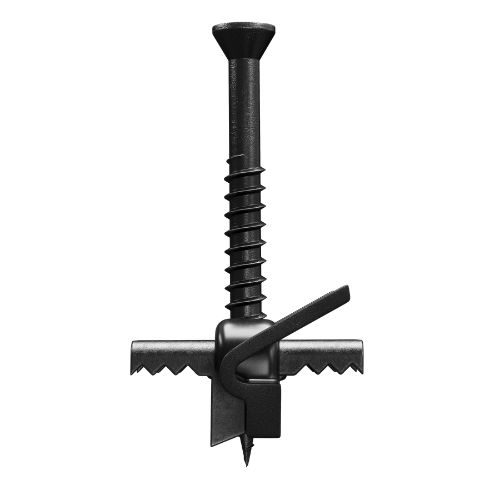
Grip-Rite Ninja Hidden Deck Clips use integrated Grip-Bite® technology that bites into the deck board, while metal spikes anchor clips to joists. Together, these features do two things:
For crews, that means fewer steps and less time on the job.
Another factor that separates hidden deck fasteners is how they’re installed.
The Ninja system combines the screw and clip into a single piece, allowing for one-handed installation. Instead of placing a clip, starting a screw, and then fastening, the process is simplified to:
Compared to traditional deck clips, this reduces handling and helps keep installs moving—especially on larger builds.
Spacing consistency is expected from most hidden deck clips, but not all systems maintain equal spacing throughout an install.
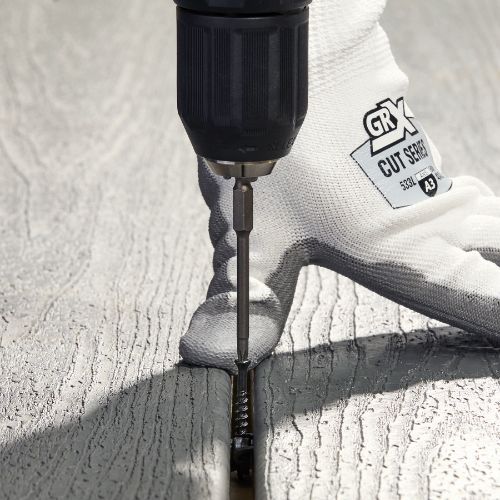
Ninja Clips are designed to self-space as they’re installed, helping maintain:
This minimizes the need to go back and adjust boards mid-install.
One area that often gets overlooked with deck clips is how the first and last boards are secured.
Grip-Rite Ninja Starter Clips are designed specifically for these perimeter rows. Made from the same 316 stainless steel and featuring Grip-Bite Technology, they provide a secure hold where standard hidden deck fasteners won’t work.
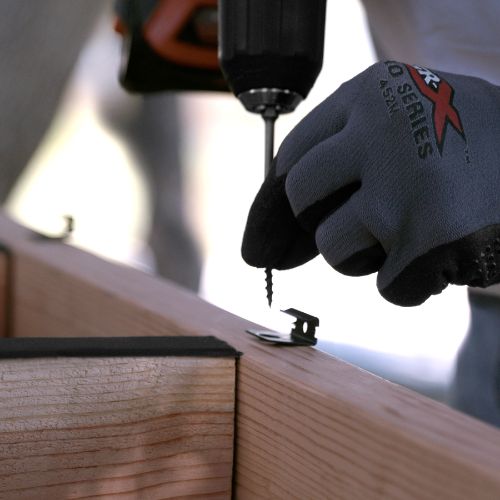
Using a matched system from start to finish helps maintain consistency across the entire deck.
For any hidden deck clips, material matters—especially in environments exposed to moisture.
Ninja Clips use black oxide coated 316 stainless steel, offering corrosion resistance for a range of conditions. Combined with Grip-Bite Technology, the goal is to limit board movement over time and reduce the likelihood of callbacks after you leave the job.
Beyond board-to-clip connection, Grip-Rite Ninja Hidden Deck Clips incorporate metal spikes that engage the joist during installation. This creates a joist-locking effect that helps stabilize the entire connection point—not just the board. By securing both the board and the joist interface, these hidden deck clips are designed to better handle movement from weather, load, and daily use, helping reduce long-term wear across the system.
For pros comparing hidden deck clips, the differences aren’t always obvious until you’re mid-install—or months after the job is done. Systems that reduce steps, stay in place during install, and actively hold boards over time tend to create a more predictable workflow and a more stable finished deck.
Warranty coverage is another area where hidden deck fasteners can vary significantly. Many systems are tied to specific composite decking brands, requiring you to use their clips or risk voiding coverage.
Grip-Rite Ninja Hidden Deck Clips are designed to be compatible across a range of grooved deck boards, and the warranty reflects that flexibility. In addition to covering the clips themselves, Grip-Rite also supports replacement of compatible boards if issues arise—providing broader protection than what’s typically offered with standard deck clips.
Grip-Rite Ninja Hidden Deck Clips are designed around those factors—focusing on secure hold, simplified installation, and consistency from the first board to the last.